On Tradition, and How to Make Homemade Pasta
When I was a kid, I was an extremely picky eater. From ages four to eleven, I had a moderate to severe undiagnosed case of ARFID. I lived almost entirely on buttered noodles. Occasionally I ate a snack, but at dinner I either ate pasta or went hungry. Years of uneven exposure therapy slowly expanded my diet, first to cheese and spreads, then to safer foods like pizza and sandwiches. The problem was compounded by multiple food allergies diagnosed at five, which turned unfamiliar foods into potential threats. What if I was allergic and didn’t know it? was a constant thought at every new restaurant or birthday party. It took a long time to get over this fear, but I’m now able to eat most things as long as it doesn’t have nuts or sesame (which is surprisingly hard these days).
At twelve, when I was finally eating more than just carbohydrates, my mom thought it would be fun if I started to make my own pasta. It would introduce me to cooking through the one food I trusted. That Christmas, I received a pasta making machine, and excitedly got to work on my very first batch. I still remember the perfect saltiness and comfort of that first bite. Christmas eventually became associated with homemade pasta. I didn’t cook any pasta the following year, but when Christmas Eve came around, my mom was reminded of the simplicity and deliciousness of last year’s meal, and asked me to make it. Once more, I rolled the dough, cut the noodles, and cooked for the family. That night, a tradition fell into place: every Christmas Eve, I made pasta for our family dinners.
This Christmas marks the thirteenth year I’ve made the same meal. At this point, the recipe matters less than the repetition. I make it the same way at the same time for the same people, because now I value the consistency over the meal itself. The act stopped being about food and started functioning as something closer to ceremony. Traditions endure because they help give shape to time; annual holidays are a great example of this. The doing has stayed the same, but the meaning has subtly changed. And I’d like to share both with you here.
To start making Davis’s Homecooked Pasta™️, you’ll need:
- A large countertop (note: hard to find in New York City)
- 2 cups of flour
- 3 eggs, large
- Olive oil
- Water
- Salt
Measure your flour and pour it out on your (cleaned) countertop. Shape the flour with your hands into a “well”. This will be where you place your eggs, yolks and all. You can choose to crack the eggs directly into the well, or whisk separately and pour into the center together. The important thing at this step is to use your hands, or a fork, to slowly mix the flour at the top of the well into the center, slowly combining the wet and the dry into a flaky dough.
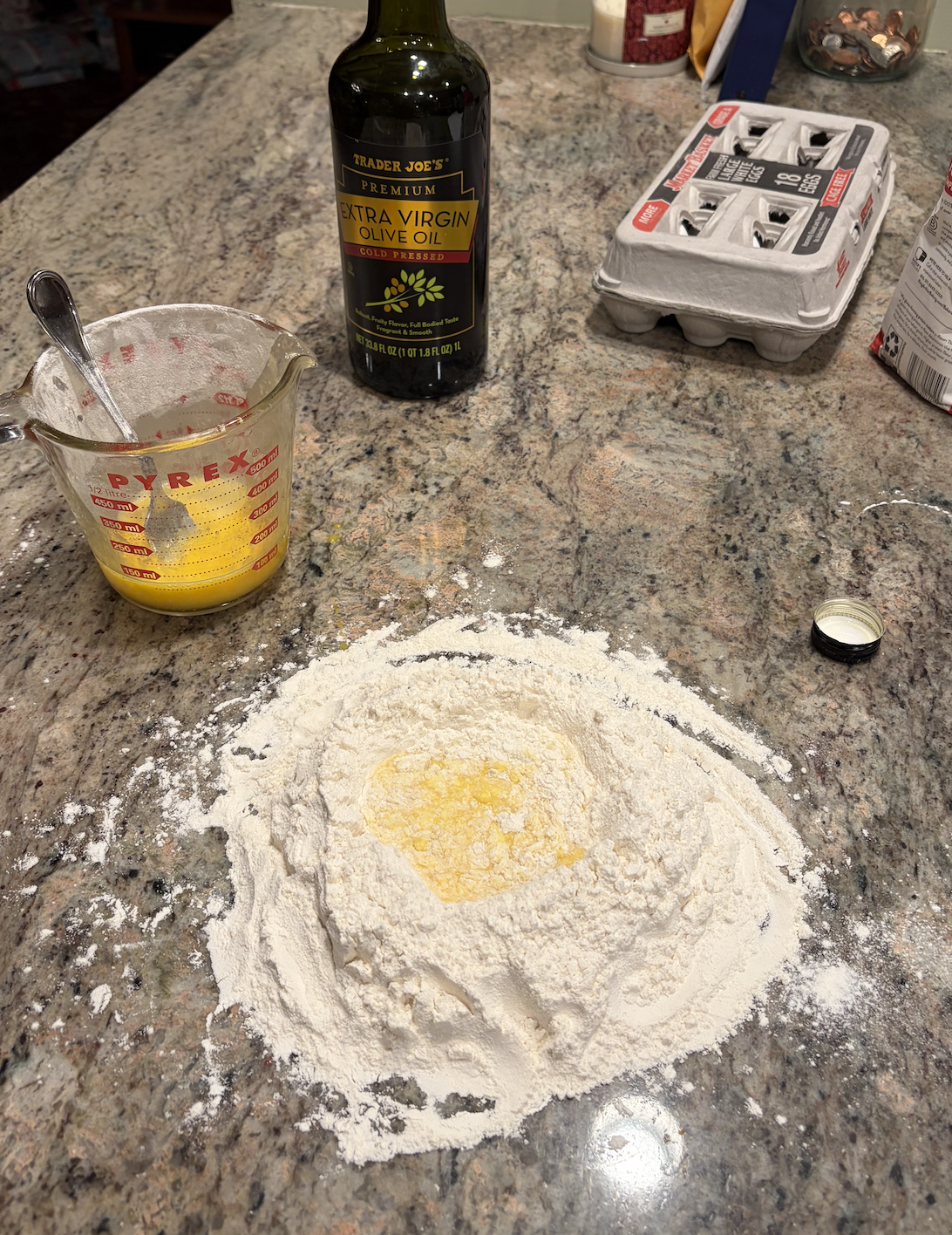
Once you’ve added all the egg, combine with your hands and begin kneading. Use 1-2 tsp of olive oil to get the rest of the flour to stick together, and use water as needed for re-hydrating the dough. Keep the surface lightly floured and continue kneading in a Rams Head wedging form, and add a few pinches of salt to the dry mixture as you knead to season the dough evenly.
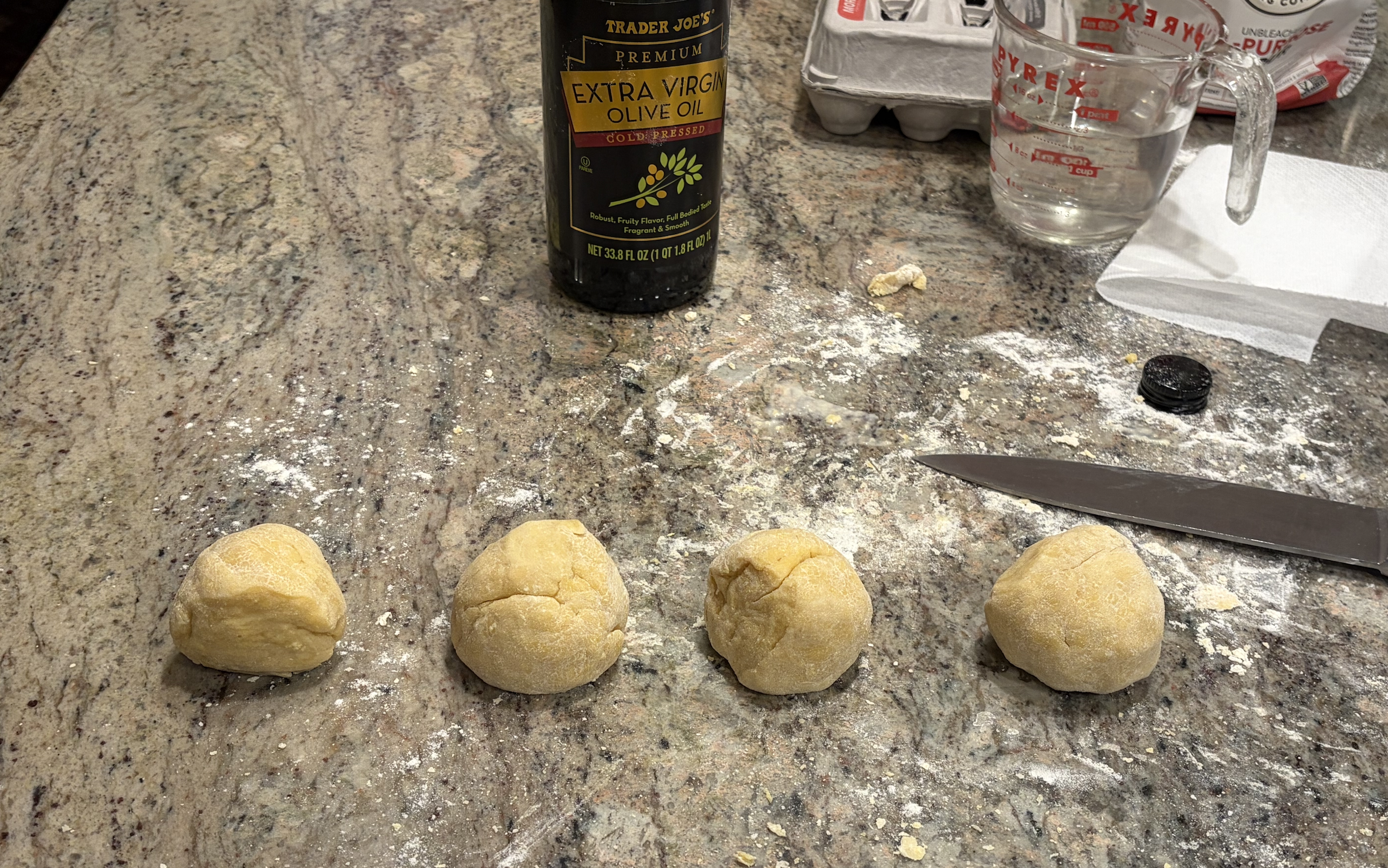
When your dough feels consistent, has a light yellow tint to it, and is moist but doesn’t stick to your hands, you’ll know you’re done. Cut the dough ball you’ve just made into four equal pieces and wrap each one individually in plastic wrap. Set aside for 20 minutes in the fridge to let the dough settle.
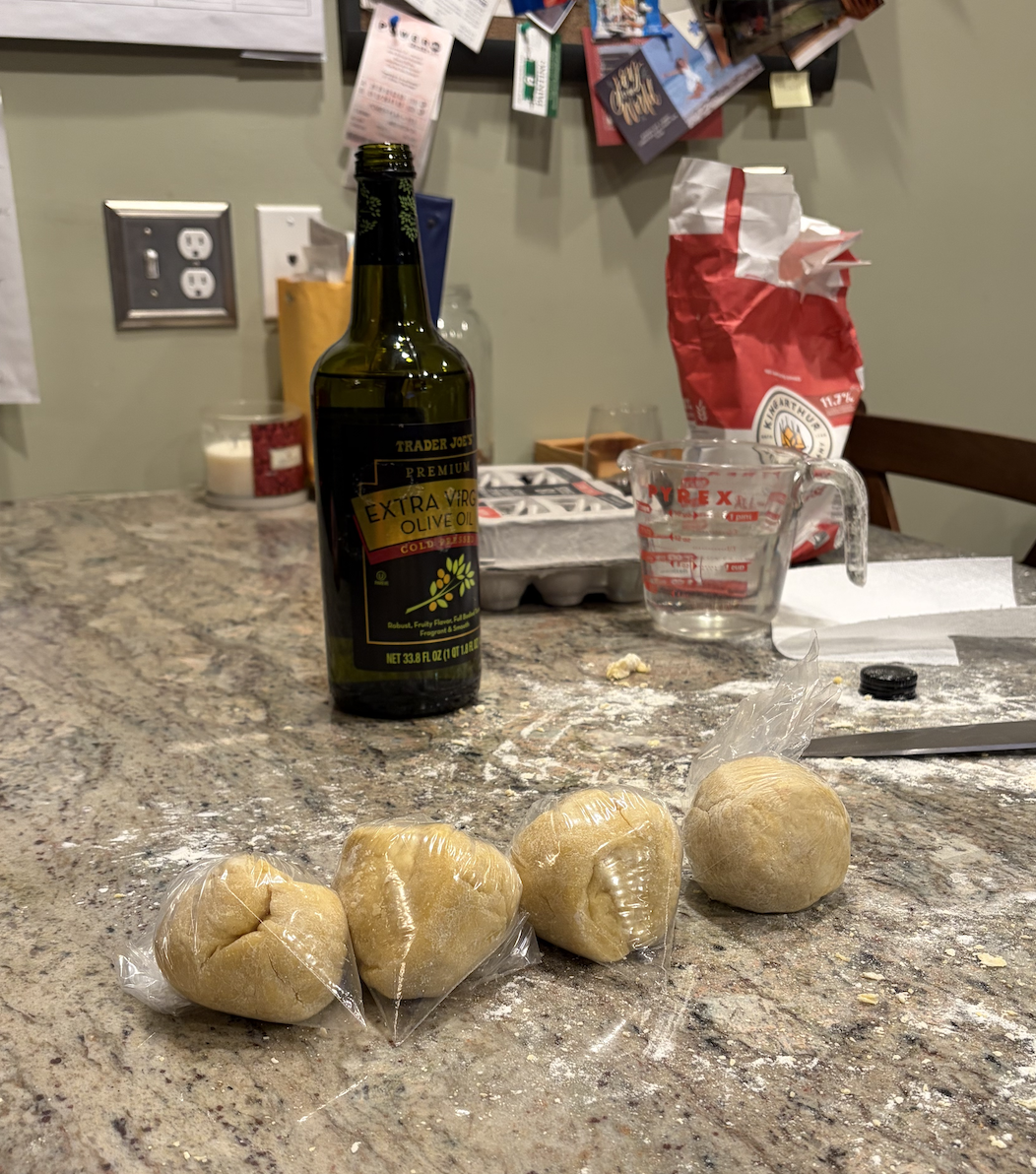
While I let it sit, I think about how much trial and error went into figuring all this out. Someone way back had to discover which grains you could actually grind up, how long to let dough sit around, what kind of heat turns it into something you can eat. And now? It’s ridiculously easy. The ingredients just show up like they were always meant to be there. Grown somewhere else, processed who knows where, grabbed off a shelf without thinking twice, now sitting in our pantry. There’s this massive supply chain behind it all that I never see. It’s pretty remarkable that I can make this whenever I want, and the abundance only feels normal because I’ve never had to live any other way.
After you’re done contemplating, get out your pasta maker. I’m using the Marcato Atlas 150, but there are lots of other great options out there. I’ve even made this recipe in the absence of machinery. Lightly dust the surface of the pasta maker and the countertop with flour, and run a tiny piece of dough through the roller a few times to clean out any residue.
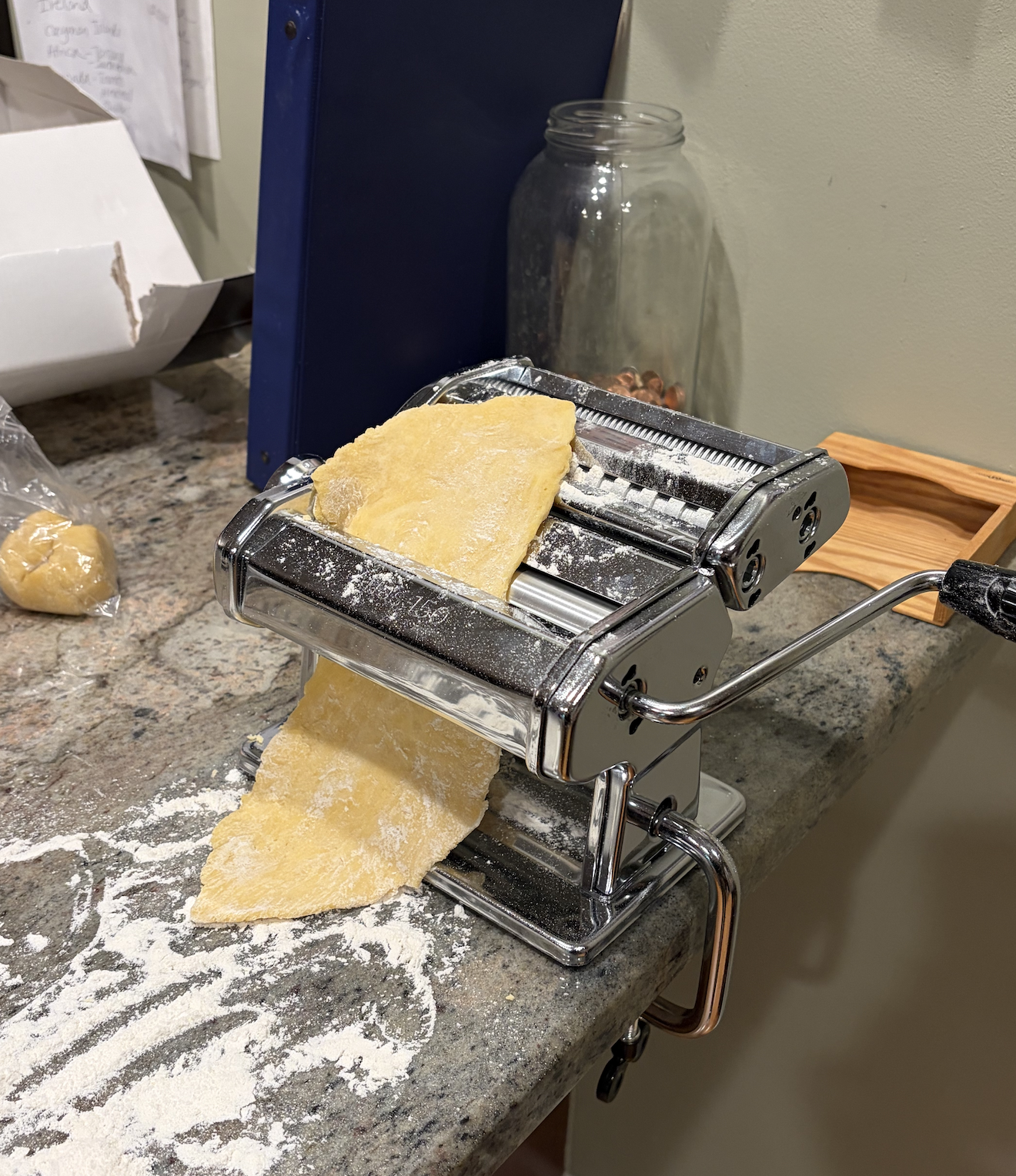
For each dough ball, flatten it slightly and feed it through the machine on its lowest setting (0–2, with the rollers farthest apart). Fold the sheet over itself and run it through again. This step isn’t about thinning the dough yet, here we’re working out air pockets and evening the texture. Repeat this a few times until the dough feels smooth and uniform. Then begin increasing the setting: first to medium (4–5), then higher (6–8), rolling the sheet through once at each level. As the dough stretches, it will naturally contract when left to rest. You’re looking for a sheet thin enough that you can see your fingers through it when you hold it up to the light.
Once the sheet is thin enough, let it rest for a minute or two so the surface can dry slightly. Dough that’s too moist won’t cut cleanly. When it’s ready, switch the handle to the cutting side of the machine. I usually go with the thicker cut, but this part is up to you. Feed the sheet in from the top and start cranking, letting the noodles fall freely onto the table. From there, transfer them to a bowl to dry a bit more before cooking.
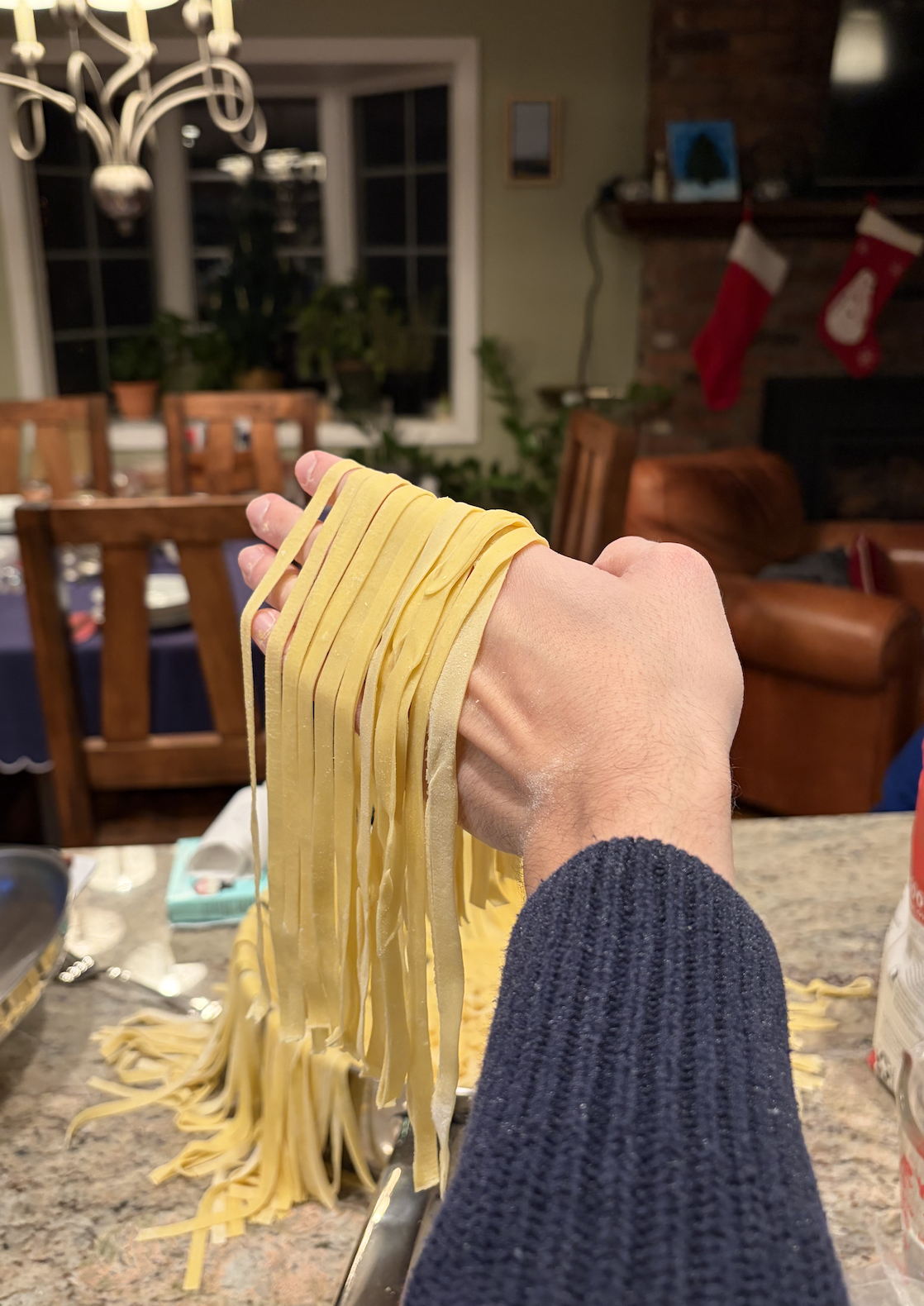
Like I said earlier, I’ve made this by hand before; back in college, I would roll the dough with a wine bottle and cut the noodles with a knife to make it for my partner. You can get creative with the shapes if you want to. The machine saves time, sure, but some of the best meals are the ones where you take longer than you need to. What takes longer tends to stick with you. There’s no single right way to shape the pasta itself as long as it’s thin enough to cook.
After all, love is a creative act. When people say that “love is the secret ingredient” they’re really trying to say “A lot of effort has gone into this meal/labor/event, effort that you will never see, that I have obfuscated so you may enjoy this now, without guilt or muscle aches, as an experience that I have designed for you, to give you comfort and care.” For now though, I’m sticking with tradition. Making the same shape I always do.
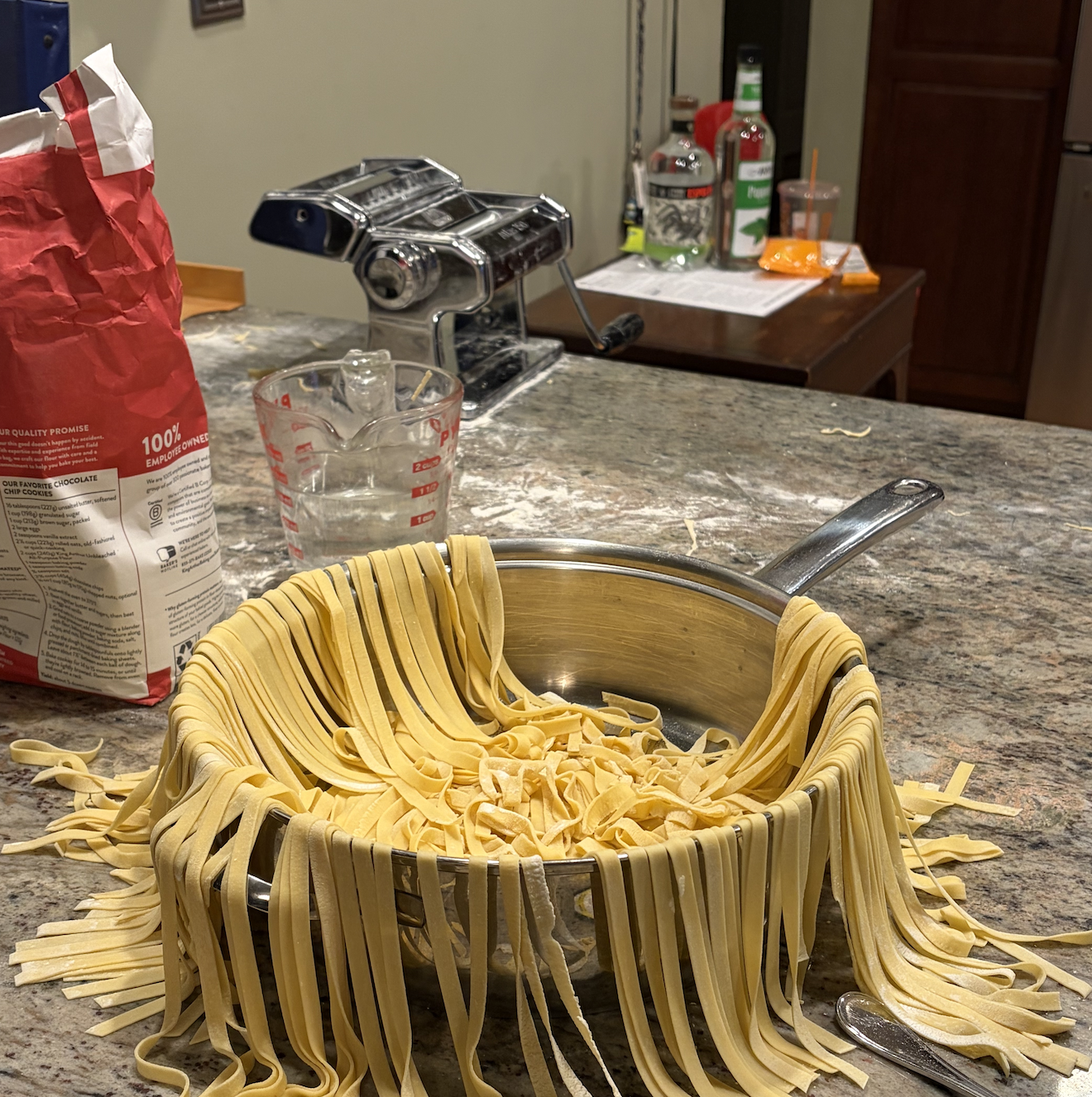
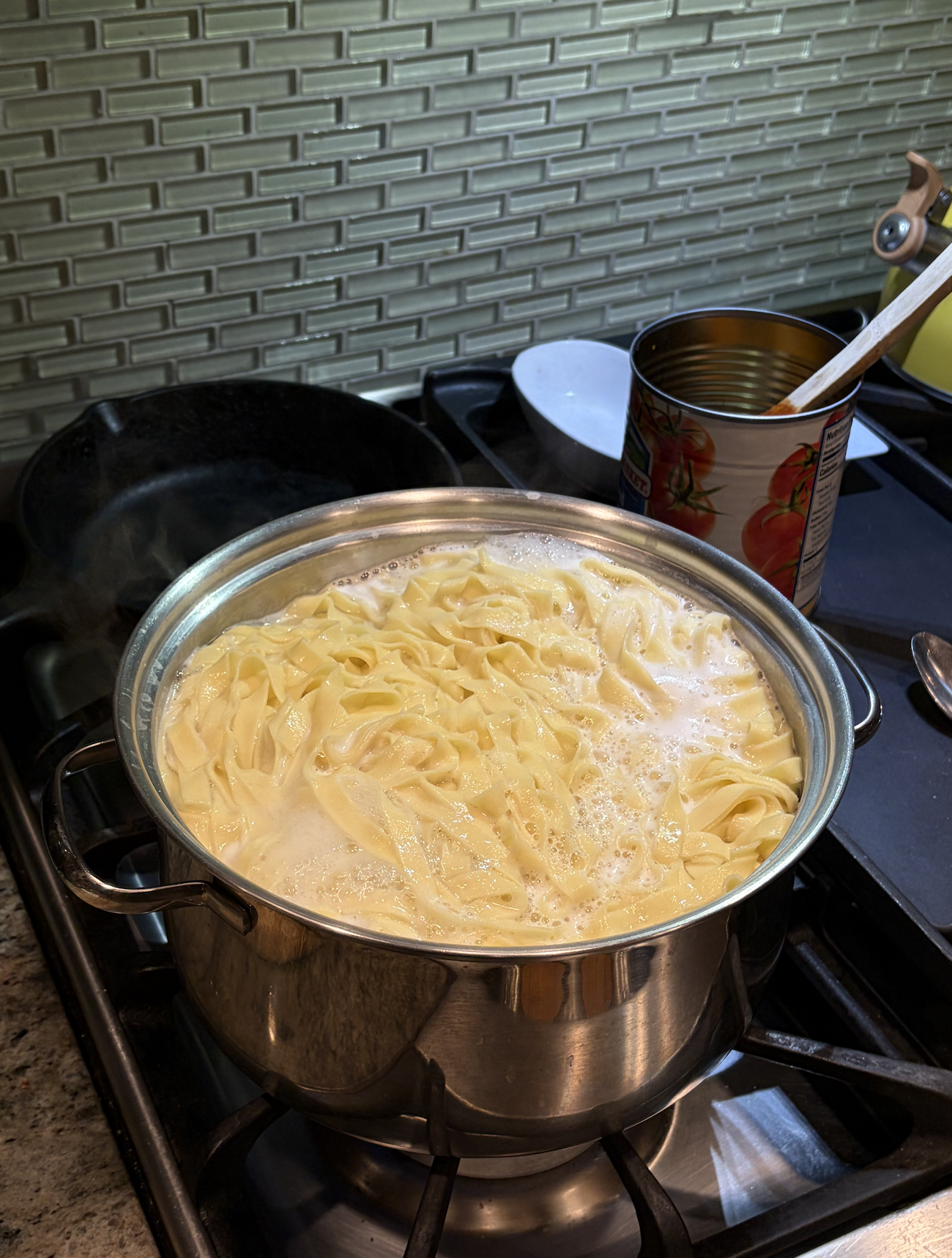
Once all your noodles are cut, it’s time to boil! Fresh noodles only need about 2-3 minutes to cook. Salt your pasta water like it’s the Dead Sea for a richer taste. Strain it and add a touch of canola or olive oil to the pasta so that the noodles have a harder time sticking together.
When it’s ready to eat, you can add any sauce or toppings to it that you’d like. The first few years we made this, I would add butter to the pot and call it a day. Now that I’ve graduated to the status of Credentialed Gourmand, my mom will make a complimentary homemade tomato sauce that pairs perfectly with a red wine or a rose.
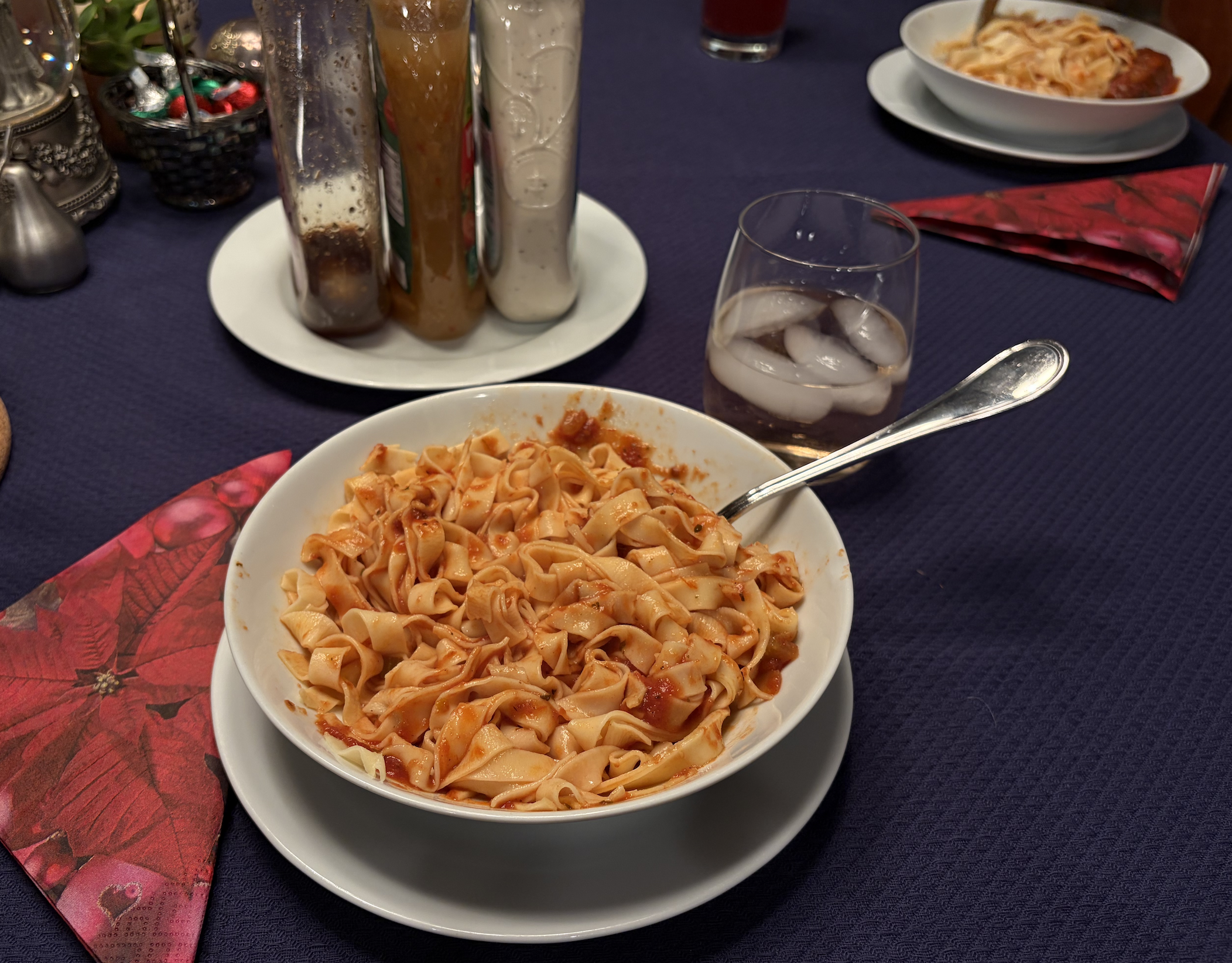
Lastly, the final ingredient to get this pasta to taste so good: eat it surrounded by people you love, and thank yourself for the effort. The first few times I cooked this meal, it honestly felt like a culinary school project. I would prepare a few hours before dinner and worry about the timing. Somewhere along the way, after a few years in a row, it stopped feeling like work. Now it’s what I do when the family gets together. A lot of cooking feels this way, and my mom tells me she shares the same familiar feeling when she gets to cook for her kids when we’re all back in town.
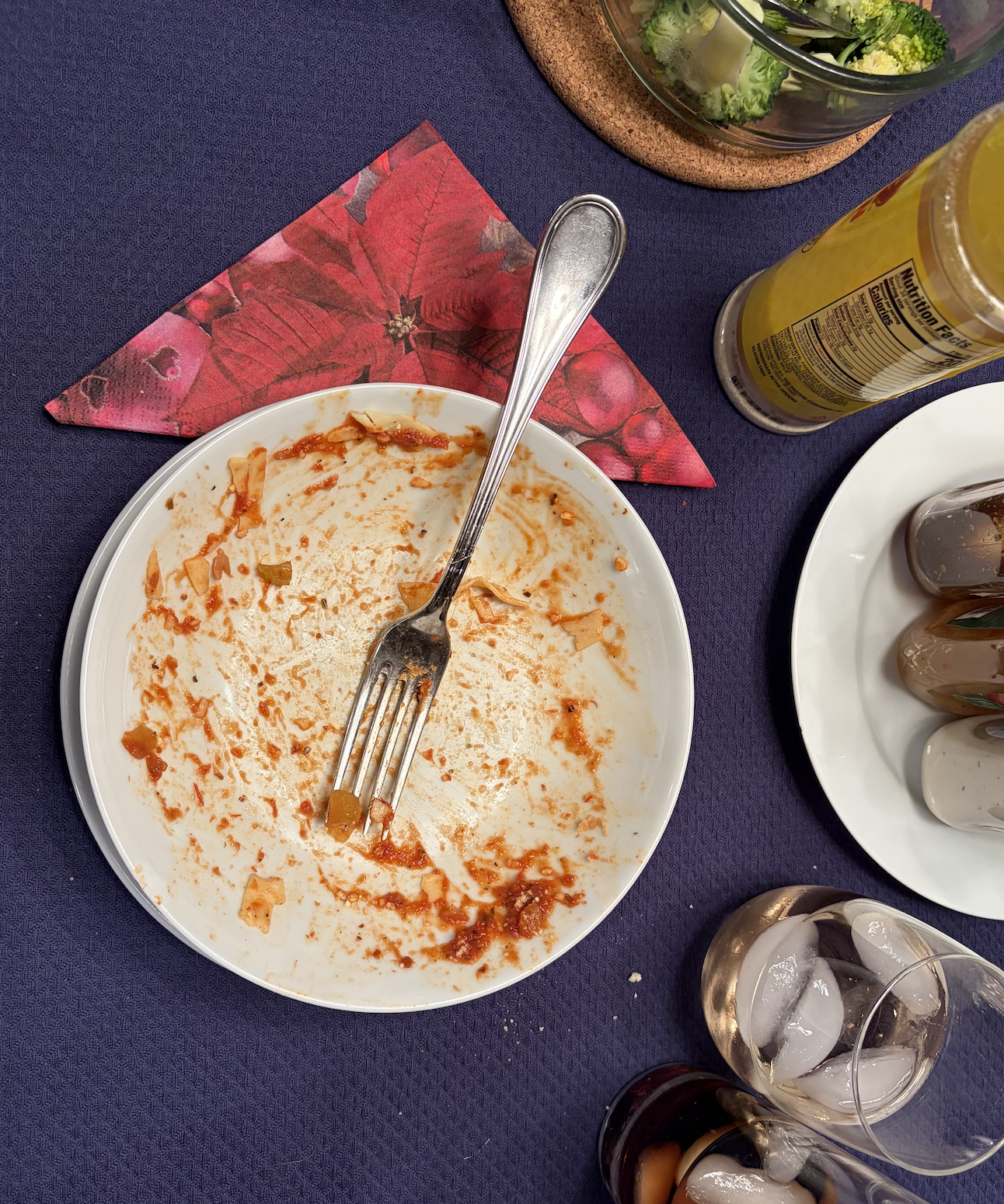
That’s what makes tradition feel different from routine, at least for me. Once something has been done enough times, it starts to carry its own momentum. You don’t have to convince yourself to do it anymore since it’s already waiting for you. In that way, tradition makes it easier to give something back, whether that’s time, food, or just your presence. You’re adding to something that’s already in motion, instead of starting from nothing each year. Going into the new year, I hope to make new traditions with my family and friends, and even with myself. And this year, I just had to show up and make pasta for my family.
I hope it’s something I get to keep doing for a long time.